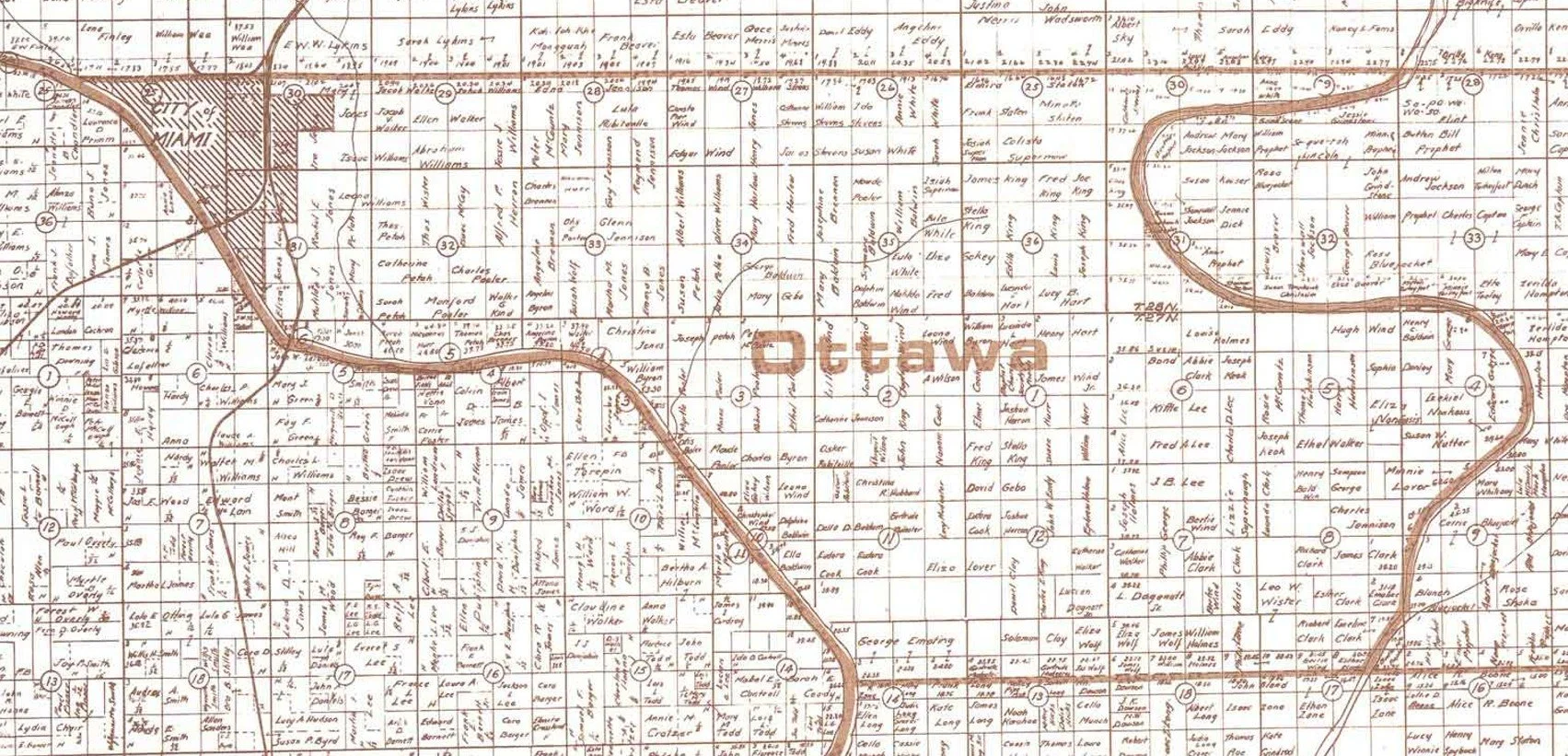
Allotment
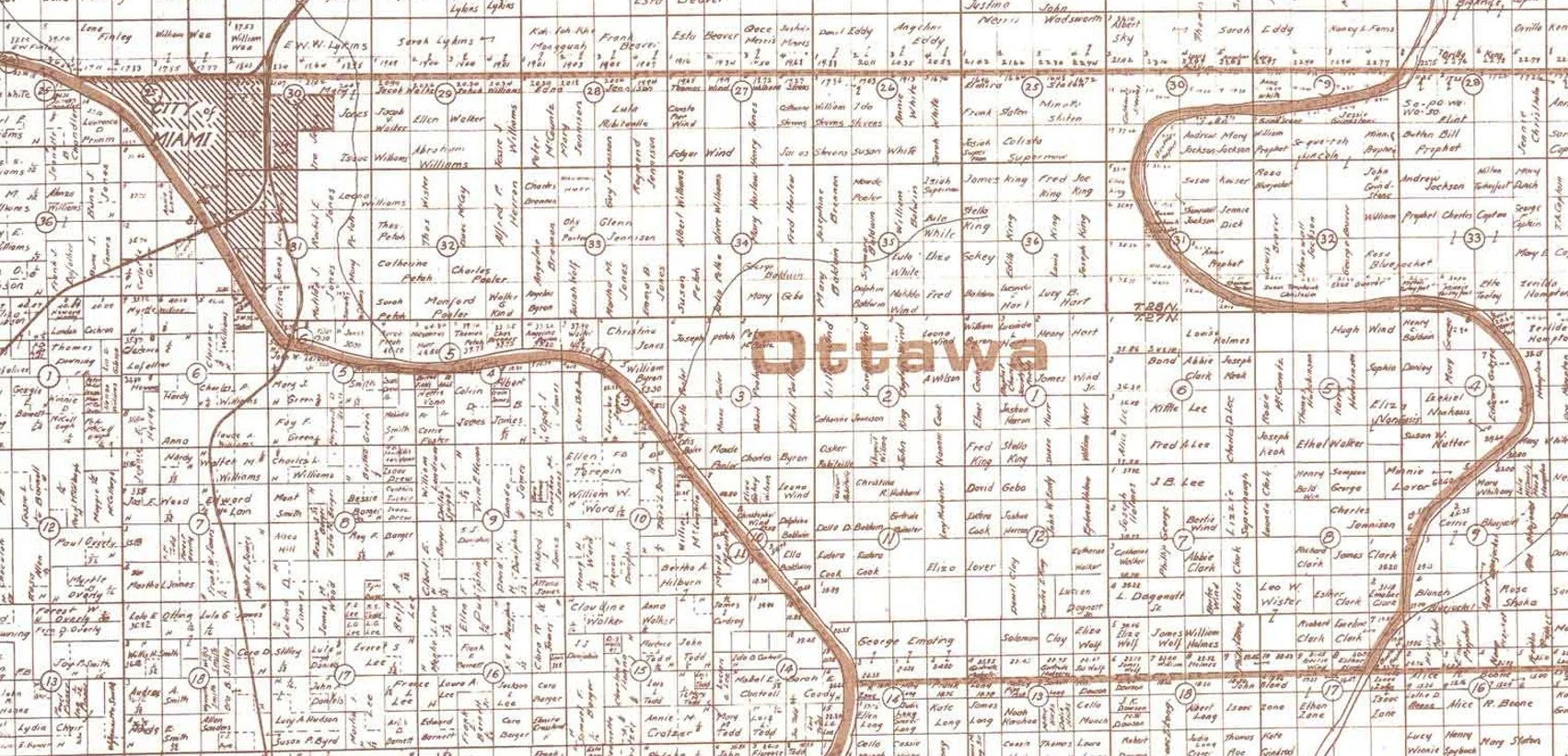
Allotment
(1891)
The federal policy of allotment was one of the most devastating tools of U.S. colonialism. Designed to break up tribal lands into individually owned parcels, allotment policy sought to erase tribal identities and open “surplus” lands to white settlement. To justify the policy, federal officials claimed allotment would help Native people gain U.S. citizenship and escape intrusive government control. The Ottawa, who had long suffered under corrupt Indian agents and resented paternalistic oversight, saw in allotment a possible shield against federal interference.
Nevertheless, the consequences of allotment were devastating. The Ottawa were allotted under the Dawes Act in 1891, and each tribal member received 80 acres. Allotment brought widespread land loss, and some Ottawas charged that federal officials illegally added outsiders to the rolls and assigned them the best lands. By the mid-twentieth century, most Ottawa families had lost all of their land, and the Ottawa Indian Cemetery was the only land under tribal government control.