
Pontiac
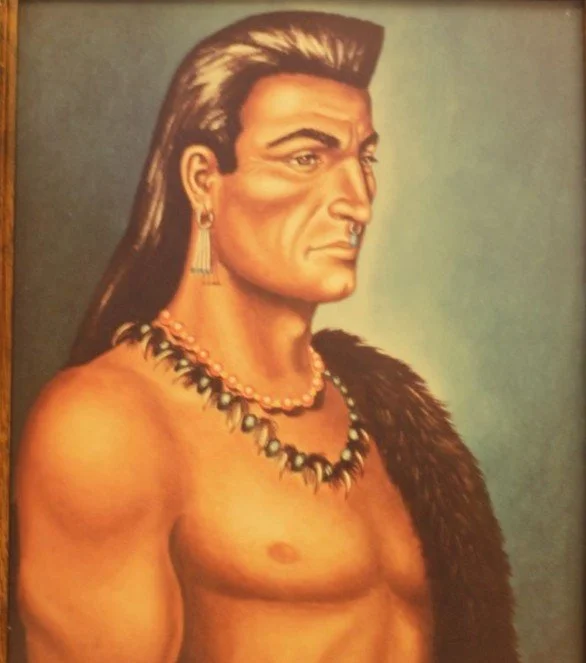
Pontiac
(c. 1714-1769)
Pontiac was an Ottawa leader born around 1715 in an Ottawa village along the Maumee River in present-day Ohio. He was a member of the Nigig (otter) doodem. Many families in the Ottawa Tribe of Oklahoma can trace their ancestry to Pontiac or to his extended kin network.
During the mid-eighteenth century, Pontiac emerged as a central figure in the network of Ottawa villages around Detroit and the Maumee River Valley. When Britain replaced France as the dominant colonial power after the Seven Years’ War, Pontiac sought to defend Native autonomy and territory from British encroachment. In 1763, he led a coalition of Ottawa, Ojibwe, Potawatomi, and other allied nations in coordinated resistance to British garrisons and forts across the Great Lakes region—an uprising that came to be known as Pontiac’s War. The conflict was not a simple revolt but a defense of Native sovereignty and a demand for reciprocal respect in trade and diplomacy. Pontiac’s efforts forced the British to adopt more measured Indian policies and helped establish a tenuous peace in the region.
For generations, settlers and popular historians recast Pontiac as a symbol of savagery or futile rebellion. Among the Ottawas, however, he remained remembered as a strategist, diplomat, and unifier. Tribal oral traditions portray him not as a violent antagonist but as a leader who fought to secure the survival and dignity of his people.