
Pooler’s Ferry
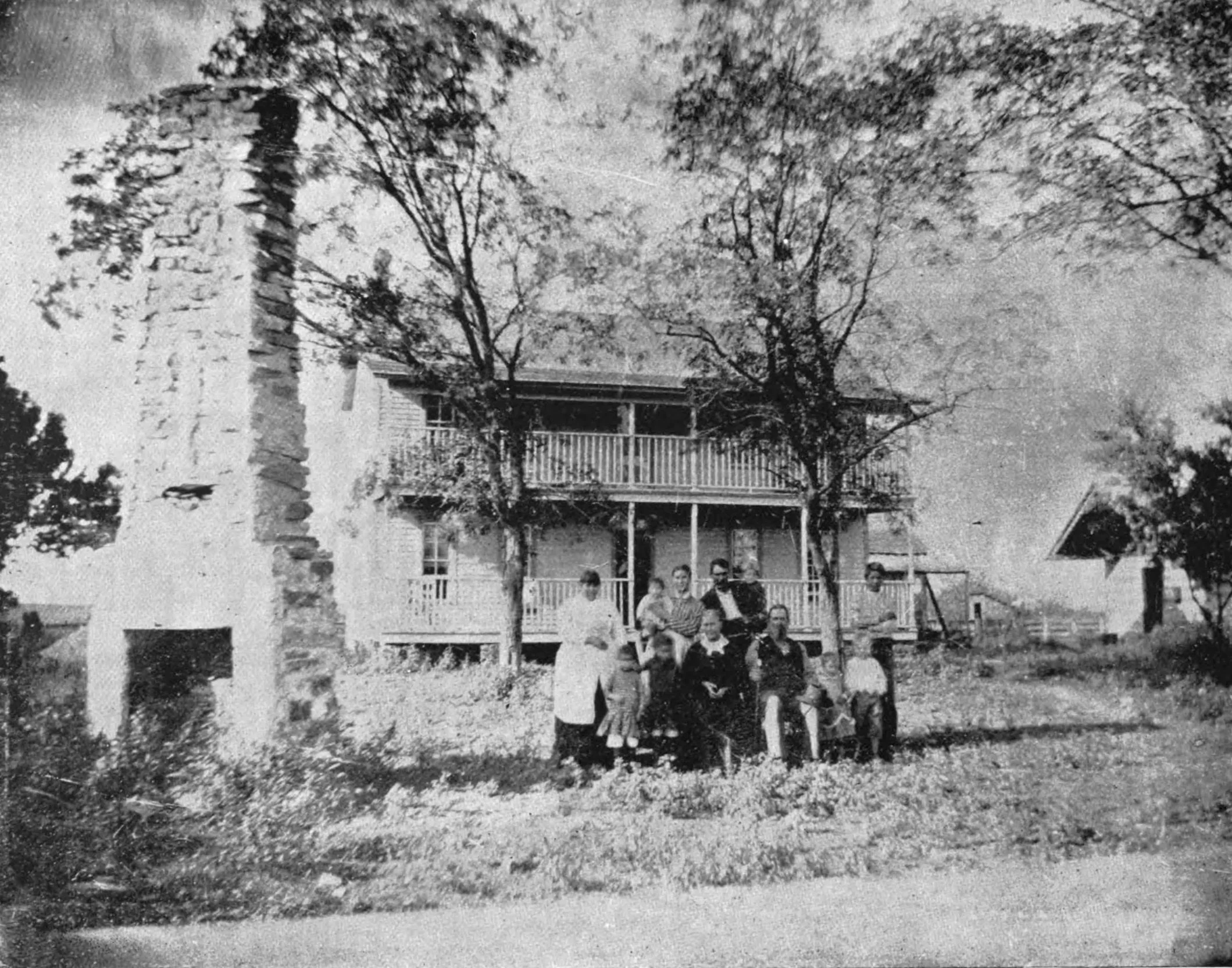
Moses Pooler and his family, c. 1890
Pooler’s Ferry
(c. 1870-c. 1900)
Pooler’s Ferry was an important commercial and social hub on the Ottawa Reservation in Indian Territory during the late nineteenth century. Operated first by Moses Pooler and later by his son, Manford B. Pooler, the ferry sat at the point where the old Military Road running between Fort Leavenworth, Kansas, and Fort Gibson, Indian Territory crossed the Neosho River. This location made the crossing a busy conduit for travelers, military transport, cattle drives, and mail carriers. The ferry carried settlers moving south and cattle herds moving north, often transporting two wagons at a time for a dollar per wagon. Loaded with cattle on the return trip, Moses Pooler sometimes cleared four dollars per crossing, creating a steady and reliable source of income.
Responding to the needs of travelers and mail routes, Pooler developed the crossing into a small service center. He operated a post office, general store, blacksmith shop, and a horse shed where government mail carriers exchanged and fed their teams. Mail drivers and passengers traveling between Baxter Springs and Fort Gibson ate dinner at the crossing, and the daily movement of horses, wagons, and stagecoaches made the site a lively node of travel and commerce. For additional income, Moses Pooler managed one of the largest farms on the Ottawa reserve and supplied feed and accommodations for the government horses kept overnight.
Pooler’s Ferry was also a place of gathering and celebration. Near Pooler’s Ferry was Pooler’s Grove, and this became the site of elaborate Fourth of July celebrations in the late nineteenth century. The seven-acre grove provided shade, and fresh water was available from two nearby springs. Pooler donated anywhere from three to five beeves which were barbequed along with sheep and hogs and provided gratis, while guests brought lemonade, homemade ice cream, milk shakes, and other treats to sell. For entertainment, children enjoyed sack races, croquet, pole climbing, free-for-all catch a greased pig, and a makeshift merry-go-round powered by “boy power,” with a ticket to ride the merry-go-round serving as a reward for pulling it. For adults, popular amusements included craps, the moccasin game, pony races, Indian dances, and speeches by tribal leaders and prominent white visitors. At least one year, Watt Jennison, the husband of Catherine Wind Jennison, was “general manager” and likely involved in coordinating most aspects of the large undertaking.
Pooler’s Ferry ceased regular operation by the early 1900s due to the construction of a toll bridge.