
Ottawa Indian Baptist Church, Oklahoma
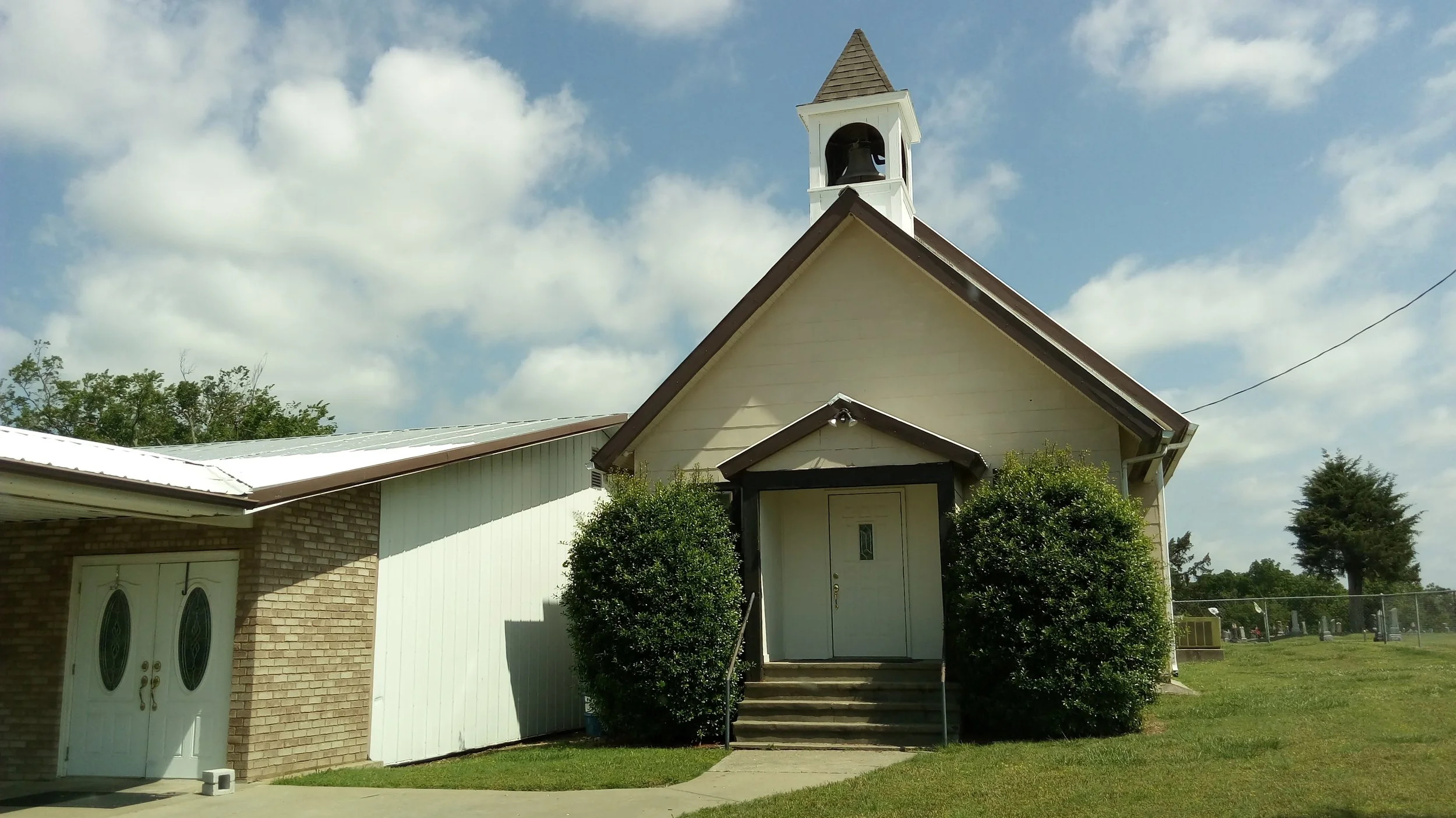
Ottawa Indian Baptist Church, Oklahoma
(c. 1868-present)
The Ottawa Indian Baptist Church traces its origins to the mid-nineteenth century, with the conversion of tribal member David Green in 1838 under the missionary efforts of Jotham Meeker.
Baptist missionary Jotham Meeker lived and labored among the Ottawas from 1837 until his death in 1855. Initially, Christianity provoked sharp internal debate within the tribe. Some leaders opposed Meeker’s presence, arguing that converts were abandoning Ottawa spiritual practices. Over time, however, the community accepted that Ottawa identity could encompass both Christians and non-Christians, and gradually most Ottawas embraced Christianity.
As Ottawa membership grew, the church developed as a vehicle for community support. The Ottawa congregation elected its own deacons and collected support for the poor and sick, and church and government leaders often overlapped. The church building itself became a shared civic space. After a flood destroyed the first meeting house in 1844, both Christians and non-Christians helped raise a new structure. Meeker noted that “opposers to Christianity… turned out and helped us,” with their chief leading the labor. Before the new building was even finished, the general council convened there, demonstrating that the church had become a tribal, not simply areligious, site.
When the Ottawa endured removal from Kansas to Indian Territory in the late 1860s, the church as a congregation moved too. In 1868, Moses Pooler and Joseph Badger King were sent ahead to construct a log meetinghouse so that the Ottawa congregation would not be disrupted. Tribal leader James Wind served as the first pastor of the Ottawa Indian Baptist Church after removal, and tribal members Isaac McCoy and William Hurr would also preach there in the late nineteenth and early twentieth century.
The log structure served the Ottawa congregation until a new building was completed in the fall of 1901. Lizzie Lavore Wolfe and Ezekiel Nonkesis were in charge of soliciting funds to construct and furnish that new building, and for a time in 1901, with the old construction destroyed and the new building not yet completed, Lizzie Lavore Wolfe notes the congregation “had our meeting out in the graves.”
After allotment, the church eventually received title to 15 acres land, and the congregation gradually shifted to become majority non-Ottawa. Nevertheless, the church remained a focal point of daily life for many tribal members, and tribal government meetings continued to periodically be held at the church well into the mid-twentieth century.