
Ottawa Indian Cemetery, Kansas
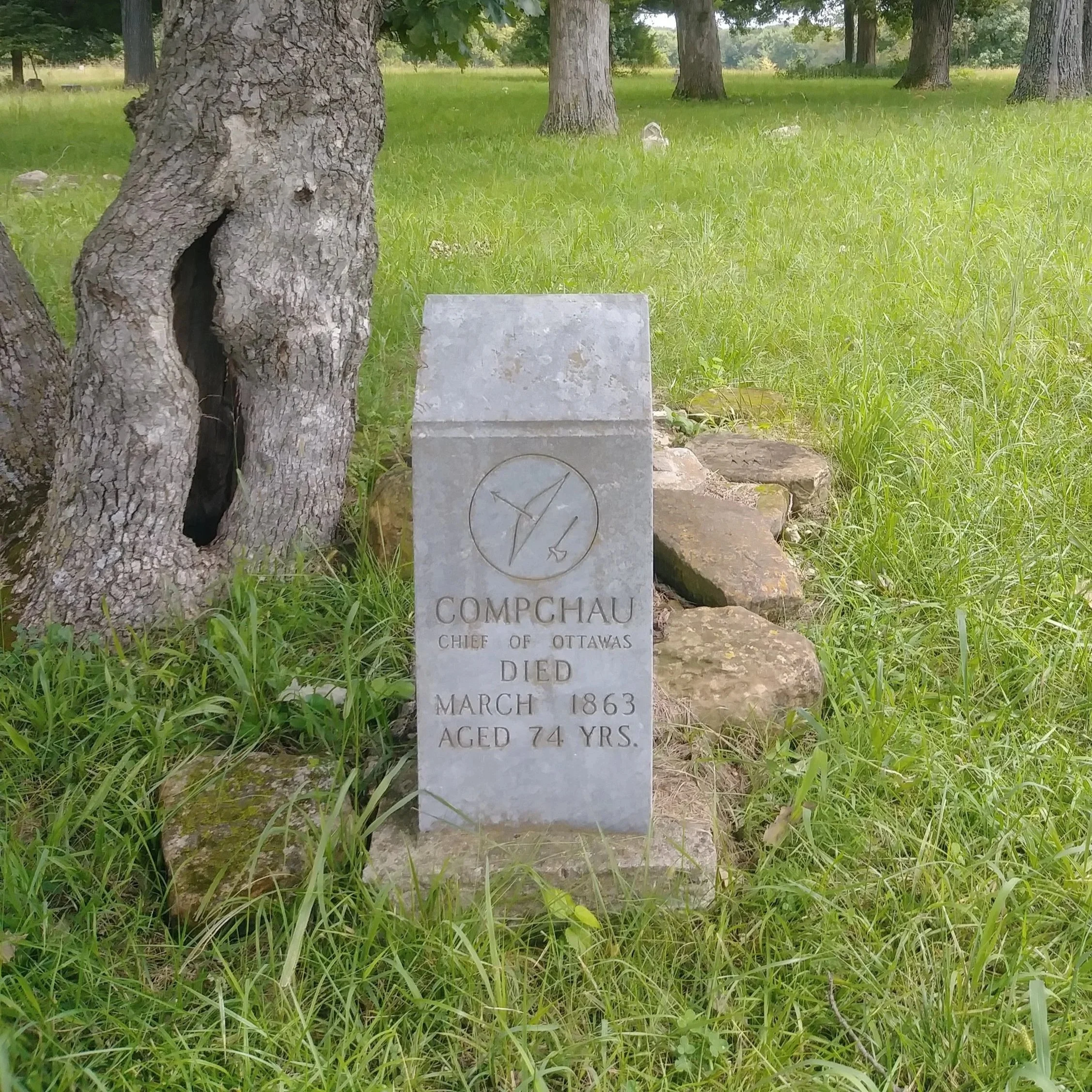
Headstone of Ottawa Chief Compchau (Kom-chaw)
Ottawa Indian Cemetery, Kansas
(c. 1846-present)
The Ottawa Indian Cemetery, historically known as the Ottawa Mission Cemetery and sometimes called the Tauy Jones Cemetery, is located in Franklin County, Kansas. The cemetery was part of the Ottawa Indian Mission led by Baptist missionary Jotham Meeker and established after Ottawa removal from Ohio. The cemetery holds the marked and unmarked graves of Ottawa leaders, community members, and some later white settlers who moved into the area after the Ottawa removal from Kansas to Indian Territory in the late 1860s.
The cemetery is situated on a five-acre rectangular tract reached by a dirt driveway marked by two twelve-foot-tall stone pillars erected in 1917 by the General Edward Hand Chapter of the Daughters of the American Revolution. Bronze plaques added in 1936 identify the site as the Ottawa Indian Mission and Burying Ground and commemorate individuals interred there, including Jotham Meeker, tribal leader Chief Compchau, medicine man Notino, and John Tecumseh “Tauy” Jones, a Potawatomi adopted by the Ottawa who played a central role in establishing Ottawa University.
The cemetery originated as the burial ground associated with Meeker’s second Ottawa mission site, relocated to higher ground after a major flood in 1844. Meeker moved his family and printing press to this location in 1845, and he worked with tribal members to construct a meetinghouse, residence, and printing office nearby. Ottawa graves, many of them originally unmarked, are concentrated on the western side of the burial area. White settler family plots, dating mostly to the late nineteenth and early twentieth centuries, occupy the eastern portion..
Control of the cemetery shifted several times following the Ottawa removal from Kansas. Local residents formed a Mission Cemetery Association, and in 1915 the property was formally transferred to Ottawa University. The school continues to maintain the site in partnership with the Daughters of the American Revolution and in collaboration with the Ottawa Tribe of Oklahoma.